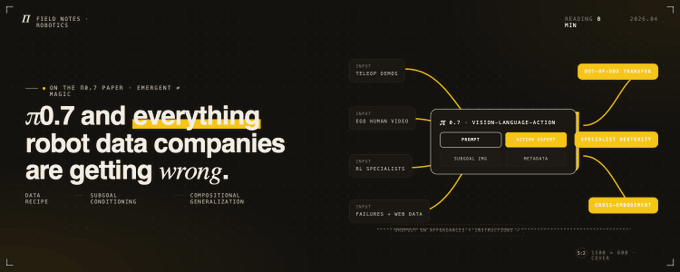
π0.7
A 5B steerable generalist robot policy whose gains come from nameable engineering: train on every kind of data except sim, then move the supervision into the prompt so a data-quality score cures the curse of mixed data and a painted future frame turns action prediction into inverse dynamics.
Read the explainer ›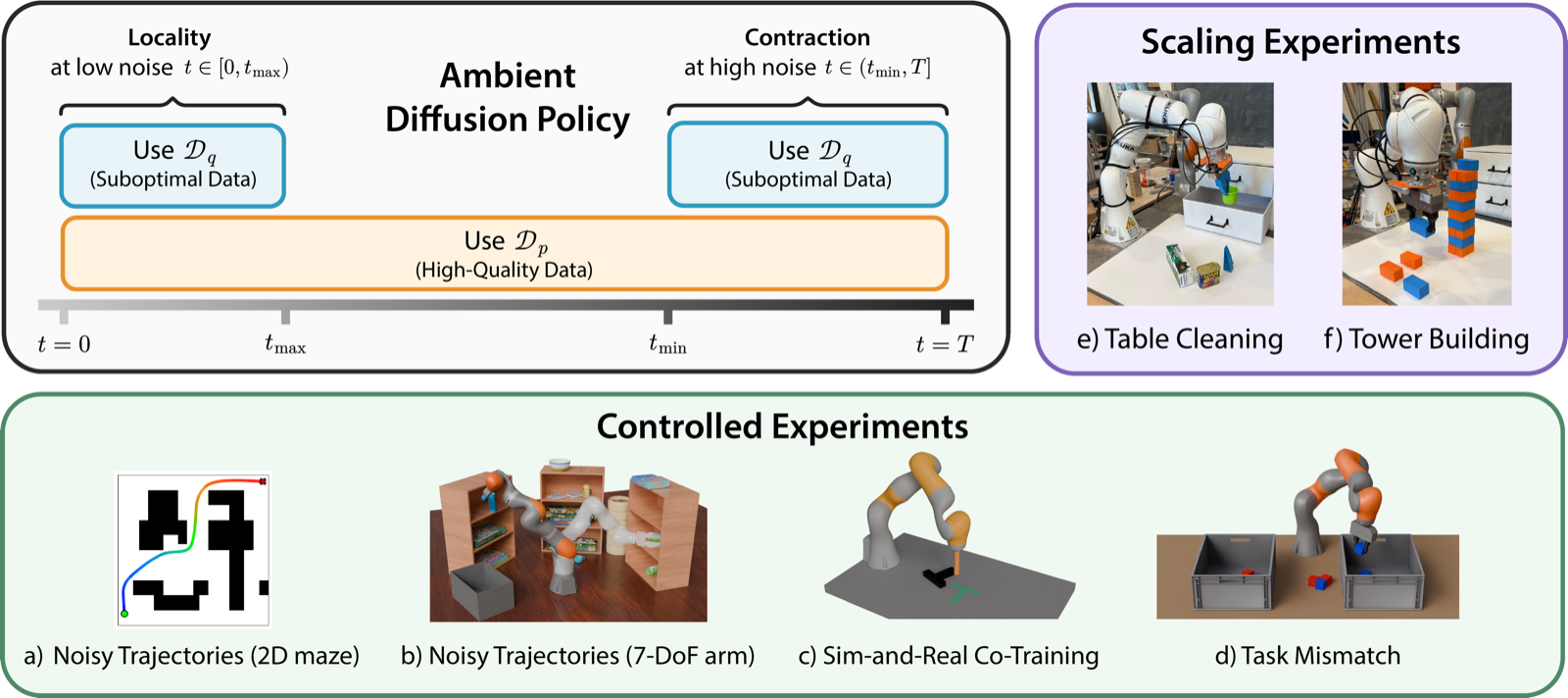
Ambient Diffusion Policy
Learn good robot behavior from suboptimal, noisy demonstrations by borrowing the ambient-diffusion trick from generative modeling, so bad data helps instead of hurts.
Read the explainer ›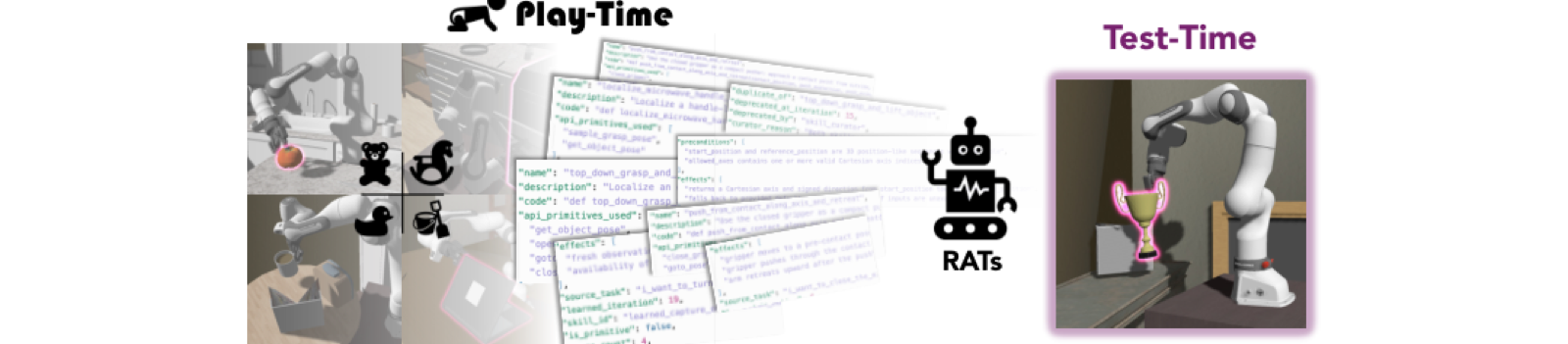
Playful Agentic Robot Learning
Robots that invent their own tasks during open-ended play, distill the experience into a reusable skill library, and redeploy it to solve held-out tasks at test time.
Read the explainer ›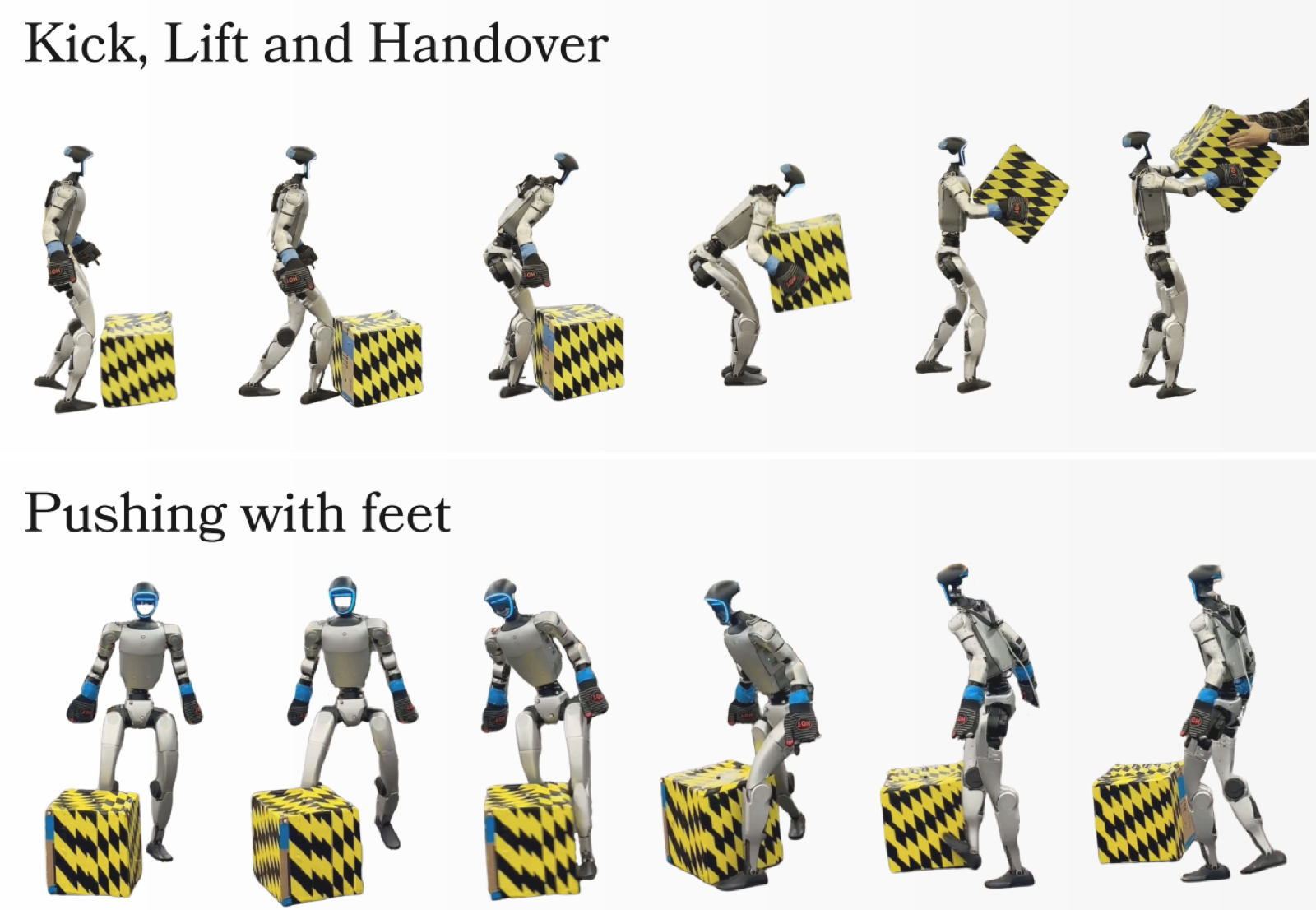
DynaRetarget
Grow the planning horizon one knot at a time to turn imperfect human motion into physically feasible humanoid loco-manipulation, then track it with RL that transfers zero-shot to a real Unitree G1.
Read the explainer ›
GR00T N1
A dual-system humanoid foundation model whose real trick is data: it mines action-less video two ways, a VQ-VAE that learns latent motion codes and an inverse-dynamics model that invents pseudo-actions, multiplying 88 hours of real robot data into roughly 827.
Read the explainer ›
π₀
Turn a pretrained vision-language model into a robot by bolting on a small action expert trained with conditional flow matching, so it generates continuous, multimodal action chunks and runs dexterous behaviors at up to 50 Hz.
Read the explainer ›